Why Does My Dog React When We Hug or Kiss? Insights and Solutions
Published · Venture Dog Training
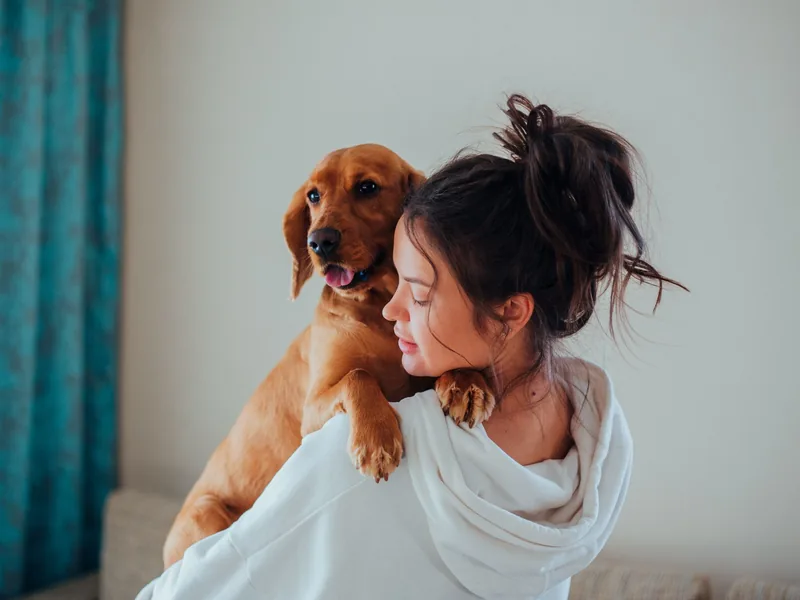
I knew things were getting serious with the girl I was dating when she had me meet her dog for the first time. Her dog meant the world to her. He was in all of her Instagram pictures, the main topic she bragged about on our dates, and she even had a copy of his tag on her key chain.
“This is Scooby,” she greeted. A miniature poodle came running at me and we soon became best friends. Every time I’d come over, he’d run up to me with a big doggy smile and often followed me around the house. But as Scooby’s mom and I continued dating, he became what seemed possessive.
Every time I shared a hug with my girlfriend, I was greeted with Scooby’s sharp canine teeth and high-pitched barking. My girlfriend assumed he was guarding her, but every time we stopped hugging, he became the happy-go-lucky dog that we knew. This became worse as we continued dating. Was he just guarding his mom? Was he jealous that I was becoming his mom’s main man? There could be a simpler explanation for this behavior, and if you and your partner are tackling this situation at home, these three areas are worth looking into.
Why Dogs React to Hugging and Kissing
1. Our Dogs Are Splitting a Perceived Threat
Dogs don’t really understand hugging and kissing the way humans and primates do. When two dogs have a potential conflict, an outsider dog may spring into action by walking in between them. In an attempt to de-escalate the perceived conflict, our dogs may be trying to split us up once they see us becoming too close.
2. Attention Seekers
It’s worth noting that some dogs love attention. This normally comes with tail wags, light barking, jumping, or face licks. You may notice the dog being pushy as they pry their way in between the two of you. In this case, the dog isn’t being protective of either one of you. This is simply a demand for attention when they see the opportunity.
3. Resource Guarding of the Owner
This may show up as a low growl, teeth showing, lunging, and sometimes even a contact bite. It needs to be thoroughly assessed by a certified behavior consultant, because what triggers this behavior may run deeper than it seems. “Resource guarding” is a very broad term here. We should look at what is triggering the behavior rather than simply jumping to a label.
So, what is there to do in this situation? Punishment may worsen this behavior and leave the dog confused. Punishment also has the potential to damage your relationship with your dog, whatever the reason the behavior started.
Solutions: Eliminating Fear
1. Desensitization and Gradual Positive Association Building
One way to change your dog’s unwanted behavior is to reinforce the small steps you want to see. Remember that humans hugging can trigger fear in dogs, so reinforcing the smallest movements that lead up to you and your partner hugging will help them in the long run.
Start by giving your dog a treat when your partner puts an arm on you. Once your dog consistently stays calm at that step, move to the next one: you and your partner getting a little closer. Every time you lean in to each other, your dog should receive a delicious treat. If your dog seems tense or gets vocal, you are going too fast or the step was too big. Go back to what your dog can handle. With time and consistency, your dog will learn that you and your partner hugging is associated with good things.
2. Management with Positive Association Building
Putting your dog in another room when you two hug is a simple way to prevent the stressful behavior from happening in the first place. Sometimes a deliciously filled Kong while your dog stays on their place mat is enough while you and your partner hug. This technique has the added bonus of building a positive association.
3. Reinforcing an Incompatible Behavior
This technique needs training broken into very small steps, using the gradual approach from the first solution. Ultimately, if your dog learns to go to a place mat every time you two hug, this can be an effective long-term solution. Break down the steps of “go to place” and pair them with hugging. The smaller the steps toward the end goal, the better.
4. Seek a Qualified Behavior Consultant
Never put yourself in harm’s way. Seek a professional if you feel you or your partner may be at risk of a bite. A professional can also help you read your dog’s body language and understand why your dog is doing what it’s doing. Our Dog Behavior Training program, led by a certified behavior consultant, works on exactly this kind of challenge.
For more information on this article, email info@venturedogtraining.com or book a free consultation.