Puppy Training Austin, TX
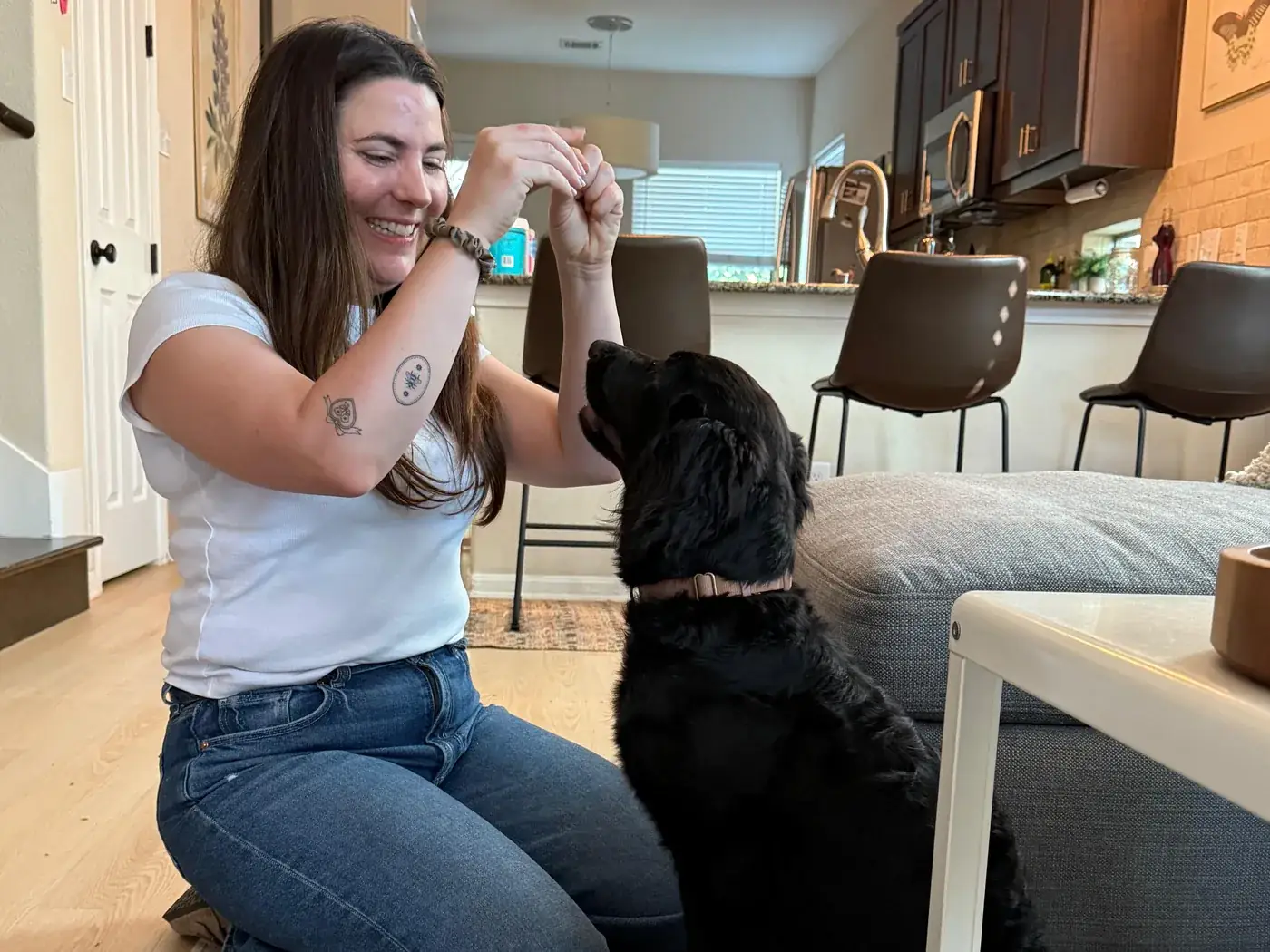
Raise a confident, coordinated puppy with Austin's movement-based puppy program. Early obedience blended with age-appropriate fitness, potty training and crate training, so your puppy learns easily, moves well and grows into the dog you are hoping for.
Professional Certifications & Memberships








Steven Tallas, CBCC-KA, Dip.CBST, CSCC — certified in canine behavior consulting, behavior science & technology, and canine sports conditioning.
The Foundation of Your Life Together
Puppyhood can feel overwhelming. The nipping, the jumping, the endless curiosity, the 6 a.m. zoomies. It is also the single most important window for shaping the dog your puppy becomes, and it does not stay open long.
The Puppy Journey is Austin's movement-based puppy program. We blend essential manners like leave-it, coming when called and loose-leash walking with core skills like sit, down and settle, and we do it through your puppy's body as well as their brain: age-appropriate balance, coordination and body-awareness work that builds physical confidence alongside obedience.
The training happens in your home and around your neighborhood, where your puppy's habits are actually forming, with structured exposure to the people, sounds and surfaces of their new world. You get a certified professional guiding every step, not a photocopy curriculum.
What Your Puppy Will Master
Emotional Regulation
Calmness, confidence, crate comfort and predictable routines that prevent anxiety before it starts.
Foundational Obedience
Sit, down, stand, leash skills, recall, gentle handling and early manners that stick.
Problem Solving
Effective solutions for nipping, jumping, chewing, demand barking and house training accidents.
Puppy-Safe Fitness
Body awareness, balance, coordination and movement confidence, built safely for growing joints.
Socialization Done Right
Structured, positive exposure to Austin's world: people, dogs, surfaces, sounds and situations.
Family Alignment
Everyone in the household using the same techniques, so your puppy gets one consistent message.
Two Puppy Programs
The Puppy Journey, $980. Foundational life skills for puppies learning to live calmly and politely in everyday life. Six in-home consultations plus one virtual introductory session, training at home and around town, structured exposure work, weekly check-ins, ongoing coaching between lessons, full phone and email support, and an optional virtual follow-up for a month after the program ends. Most families see progress within the first sessions.
Little Movers, Big Manners, $1,020. Our signature movement-integrated program. Everything above, taught through motion: exercises that build body awareness, coordination and focus, conditioning and enrichment designed for growing puppies, and confidence-building exposure to new objects and surfaces. A fitness-forward approach that improves learning now and resilience for life.
Why Movement Matters for Puppies
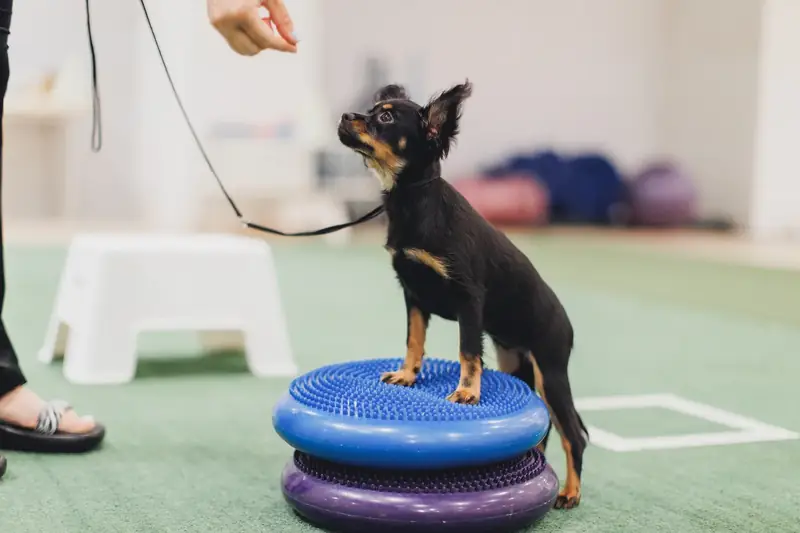
Most puppy classes treat the body as transportation for the brain. But puppies who develop balance, coordination and body awareness early become adults who are physically confident, less injury-prone and noticeably calmer, because a puppy who trusts their body meets the world with curiosity instead of caution.
This is where Venture's canine fitness expertise gives Austin puppies an edge no standard class offers. Every movement exercise is designed for growing bodies by a trainer certified in canine sports conditioning, with a fitness credential from NC State College of Veterinary Medicine. Gentle, safe, age-appropriate, and quietly transformative.
Start your puppy off on the right paw. The consultation is free, and the earlier we meet your puppy, the easier everything that follows becomes.
Potty Training and Crate Training, Built In
Every puppy program includes the two things new owners lose the most sleep over. Potty training fails for one reason: inconsistency. We install a complete system in your home, a schedule matched to your puppy's age and biology, supervision and management that prevent rehearsal of the wrong habit, and reinforcement timed so your puppy genuinely understands what pays. Then we coach everyone in the household on running it. Most puppies make dramatic progress within two to three weeks; no punishment, ever, because scolding accidents only teaches dogs to hide them.
Crate training done right gives your puppy a portable safe place: calmer nights, easier travel, faster potty training, and somewhere to opt out when life gets loud. We use a gradual, positive process: the crate becomes wonderful before it ever becomes closed, duration builds in seconds rather than hours, and we teach you the limits, a puppy can hold roughly its age in months plus one hour, so the crate stays a bedroom and never becomes a punishment.
Adult dogs with accidents, marking or crate baggage are welcome too. Those cases run through the same system inside our in-home training.
Related Programs
As your puppy grows, continue with In-Home Dog Training, build body confidence with Canine Fitness, or add structured socialization in our Group Classes.
Puppy Training Questions
When should puppy training start?
Now. The socialization window closes around 16 weeks, and what your puppy experiences before then shapes their confidence for life. Training can begin as early as eight weeks with age-appropriate methods. If your puppy is older, do not panic, we meet every puppy where they are.
What is included in The Puppy Journey?
Six in-home puppy consultations plus a virtual introductory consultation for $980. We cover manners, impulse control, leash skills and settling, with structured exposure to people, environments and distractions, a customized plan with weekly check-ins, and full phone and email support. A 10% supporting student discount applies.
What makes Little Movers, Big Manners different?
It is our signature movement-integrated program at $1,020. Obedience is taught through motion rather than static commands, with exercises that build body awareness, coordination and confidence, plus conditioning and enrichment designed safely for growing bodies. Puppies learn through their bodies, and it shows in their focus and resilience.
Do you cover potty training and crate training?
Yes. Both are core parts of every puppy program: a complete potty routine with management and reinforcement, and a gradual, positive crate process. Adult dogs with accidents or crate baggage are handled inside our in-home training.
What about biting, nipping and chewing?
Completely normal, completely fixable. We coach you through proven management and redirection strategies for mouthing, jumping, demand barking and chewing, so the annoying phase stays a phase instead of becoming a habit.
Ready to Transform Your Dog?
Book a free consultation and tell us what you and your dog are struggling with. We’ll map the fastest route to calm.