


Puppy Socialization & Fitness Games: Build a Confident Puppy
- Venture Dog Training

- May 13
- 6 min read
Updated: May 19
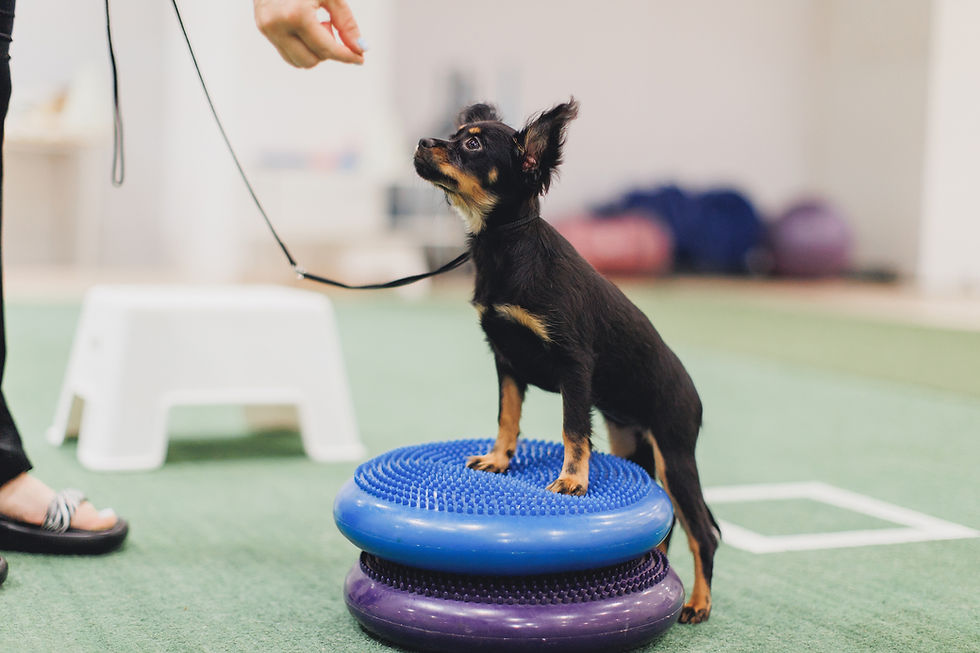
You just got a puppy! Adding a new family member is exciting, but it can come with general guidelines that any family adopting a puppy should be aware of. This includes what basic obedience training looks like for a puppy, how to puppyproof the home to prevent common problems that new pet parents have, and, equally important yet often the most overlooked, how to build a strong, confident puppy.
Socialization starts for a puppy the moment they are born. This is important to understand as anything they are exposed to throughout their life will either cause them to be more confident, super-star puppy, or fearful towards certain stimuli, like specific sounds or visuals.
What is Puppy Socialization Training and Why is it Overlooked?
Puppy socialization training involves exposing a puppy to several new stimuli in a positive manner. This includes new people, other dogs, other animals/pets, and environments. This controlled sense of training doesn’t just include interacting/playing, but often times it can include calmly observing or engaging with something, like a novel object. Done correctly, this can start your puppy’s path to becoming a behaviorally strong and confident dog.
Socialization training does have its flaws, though. Flooding, meaning forcing your puppy to face a highly intense stimulus until they stop responding, can lead to a variety of severe problems and doesn't qualify as the most effective way to socialize a puppy. Additionally, over-socializing, meaning socializing too often, can lead to stress and a frustrated dog that can often turn into its own form of reactivity.
To make this a bit more complex, we also have to be aware of the key periods of socialization and protecting puppy growth plates.
At 3-16 weeks of age, puppies are going through a whole lot of growth and development. While the first couple of weeks are dedicated to normal growth and gentle handling from the breeder before going to their new home, there is a sense that having a puppy learn how to use their own body functionally, even at a few weeks old, can lead to a great journey down the road.
Early Puppy Socialization Tips for Breeders (Weeks 3 to 6)

Fortunately, we don’t have to do much to “teach” movement, since it can come naturally as the puppy ages. It just takes some gentle encouragement and supervision. Even from 3 weeks of age, puppies experience their environment through touch and smell. We often see them crawling, changing direction, and attempting to climb onto objects. At this stage, breeders can introduce a puppy to tunnels, short slides, or a kid's playhouse, but don't expect them to use it properly until they are a little older.
Although movement is just beginning, this allows the central nervous system, sensory organs, thermoregulation, and digestive system to develop in the dog. To encourage this development, breeders can encourage them to walk on different textures, such as newspaper, foil, bubble wrap, blankets, and/or cardboard. Supervision is necessary as these objects can be slippery and potentially scary. Remember not to force a puppy at this age. Gradual exposure to these new surfaces and obstacles is important.
While puppies may slip or trip as they learn to move, this trial-and-error process is essential for their motor development. Breeders should keep experiences positive as puppies explore until they are ready for their new homes.

Puppy Fitness Games and Socialization Ideas for New Parents
Okay, new puppy parent, the responsibility of taking the lead in encouraging healthy movement is on you. No pressure. The American Veterinary Society for Animal Behavior (AVSAB) released a statement that socialization should start before the puppy is fully vaccinated. It’s important to take safety measures and keep things light and positive. This doesn't mean taking them to the dog park where there are a lot of dogs possibly unvaccinated or sick, but clean and/or sanitized areas inside and outside the house can be an enjoyable exploration.
When it comes to movement, just as the breeder was encouraged to do, building easy play areas with low obstacles is good for the puppy at 6-8 weeks of age. Making a ball pit inside of a child’s swimming pool, having them walk on/over wooden planks, or basic toy play are great at this stage. Toy play shouldn’t be too intense. Fetch is a typical aging puppy game, but because of the constant twists and turns, it can be damaging to their growing joints. I would much rather have them learn to grab a toy that is already still and not bouncing around.
These games should focus on gentle movement, mental stimulation, and confidence building, rather than high-endurance or impact-based activities. A low-risk stimulating environment can consist of boxes and tunnels to walk over and through. Think of this like a puppy gym. Basic hand play is okay at this stage.
At 7 weeks of age, the puppy should start showing better confirmation and be responsive to certain obedience skills, like come when called, and may even start following you around the house, which can provide its own level of beneficial physical enrichment as well. We also see the notorious chewing on items, which can be beneficial for their jaw muscles as long as it's puppy-approved and edible.
As the puppy hits 9-10 weeks of age, we can now start introducing puppy fitness games. Here, we'll focus on more low-impact activities that build body awareness, coordination, obedience, and overall confidence without putting excessive strain on growing joints. These can be things such as scent work, gentle tug-of-war, hide-and-seek, and foundational agility/fitness games.
Unstructured Exercise and Puppy Enrichment Activities
If your puppy is gangly, that’s okay. Many puppies start gangly as they grow into their strong bodies. You may see some weird quirks, like sitting with a hip toss. What is important here is to provide them with an environment that supports their body, like carpet/rugs, yoga mats, rubber mats, and grass/dirt. In the real world, it's impossible to always have a supportive set-up 100% of the time. Puppies do have normal stages of physical development. When in doubt, get a video to show your veterinary professional, and potentially get them tested for orthopedic issues, even if no issues are present.
While repetitive, high-intensity exercises, like jogging or high jumping, should be avoided until growth plates close, we have to remember that puppies will be puppies. Finding a great playmate, whether it's another puppy friend (who has great play skills) or a friendly senior dog that has the utmost patience, can enhance your dog's social skills. This and other forms of unstructured exercise, such as playing with a favorite toy or engaging in a case of the zoomies, can support the puppy in controlling their arousal. Some puppies need some slight help, which a bit of obedience building can address. Overall, play is not the end-all. Some puppies prefer to watch others while engaging in their own form of unstructured exercise in their own time. Additionally, introductory fitness, like body awareness, sensory training, and balancing, can be introduced. In fact, 5 minutes of structured exercise working on a specific fitness skill can be very beneficial for an 8-week-old puppy, before both mental and physical fatigue start to kick in. At this stage, walking or trotting your puppy on a leash for 1 hour a day can be beneficial and encourage natural movement. Consistent breaks are important for puppies. General and distant solo socialization, socialization/obedience classes, puppy sport foundation classes, and puppy fitness classes all become available around 10-12 weeks of age in many areas, like Austin, TX. These classes can help with confidence building, awareness of the environment, and even awareness for themselves while being around other dogs. At this stage, just as physical enrichment is important, mental stimulation and relaxation is also important. This encourages proper regulation and the ability to be okay with slowing down. Food puzzles, licky mats, snuffle mats, and the works help here. Obedience and relaxation training can support as well. We have to encourage our puppy to be okay doing nothing or being bored. And lastly, allowing your puppy the sometimes undesirable need to sleep is vital to a puppy's growth and overall mood. Allowing restful structure in these ways will pay off in the long run. Bringing a new puppy home in Austin? Don't guess through the critical socialization window. Learn how to safely build your pup's body and mind with our specialized Puppy Obedience Training Packages or join an upcoming Canine Fitness Group Class. Contact Venture Dog Training today to get started!


Comments